Contact us
 Visit CPRE.org
 Donate
Renewable energy matters. So does where we put it
CPRE West Yorkshire objects to Calderdale Energy Park at Walshaw Moor
CPRE West Yorkshire has submitted its response to the statutory consultation on the proposed Calderdale Energy Park at Walshaw Moor.
We support urgent action to address climate change. Renewable energy, including onshore wind, has an important role to play in the transition to a low-carbon energy system. But renewable energy must be delivered in the right places, and in ways that protect nature, soils, water, landscape character, cultural heritage and local communities.
That is why CPRE West Yorkshire objects to Calderdale Energy Park in its proposed location.
This is not an objection to renewable energy. It is an objection to the placement of nationally significant industrial energy infrastructure on one of West Yorkshire’s most sensitive upland landscapes.
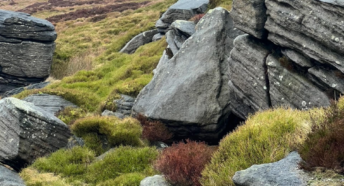
Walshaw Moor is not simply empty land awaiting development. It forms part of the South Pennines moorland landscape and is associated with protected habitats, important bird species, blanket bog, deep peat, sensitive hydrology and a landscape of exceptional public value.
It stores carbon, supports wildlife, regulates water and forms part of the setting and identity of Brontë Country and the wider South Pennines.
The wrong place for major energy infrastructure
The proposed development would include turbines, access tracks, crane pads, borrow pits, underground cabling, compounds and substantial construction traffic. CPRE West Yorkshire is concerned that development of this scale would fundamentally alter the character, function and integrity of the moorland landscape.
National policy gives strong support to renewable and low-carbon energy. We recognise that. But that support does not remove the need to protect irreplaceable habitats, designated sites, peatland, water systems and affected communities.
In our view, the applicant has not yet demonstrated that other, less sensitive locations have been properly assessed and ruled out before proposing a major onshore wind scheme on peatland and within a highly sensitive designated moorland environment.
Peatland, carbon and water
Blanket bog and deep peat are irreplaceable natural assets. They store carbon, regulate water, support specialised habitats and species, and contribute to the climate resilience of downstream communities.
The construction and operation of the proposed development would require infrastructure across a sensitive peatland landscape. We are concerned that tracks, turbine bases, cable trenches, borrow pits and other works could damage peat structure, alter hydrology, increase drying, release carbon, affect water flows and increase flood and fire risk.
Any carbon payback assessment must therefore be based on robust, site-specific evidence. Climate benefits cannot simply be assumed where the development itself risks degrading a major carbon store.
Habitats and birds
Walshaw Moor supports a significant upland bird assemblage and contributes to the ecological connectivity of the South Pennine Moors. The potential for habitat loss, disturbance, displacement, fragmentation and collision risk cannot be treated as a secondary issue.
Where a proposal lies within or affects an internationally important ecological network, the assessment must be complete and capable of informing a lawful Habitats Regulations Assessment.
CPRE West Yorkshire is concerned that the proposal could fragment a highly sensitive upland habitat complex and affect species and habitats that are integral to the moor’s ecological function.
More than the visibility of turbines
Landscape impact is not just about whether individual turbines can be seen from particular viewpoints.
It is about landscape character, tranquillity, sense of place, cumulative impact, cultural associations, public access and the contribution of the moorland setting to the identity of Brontë Country and the South Pennines.
This is not just about whether individual turbines can be seen from particular viewpoints. It is about whether we are prepared to lose the open, undeveloped character of one of the South Pennines’ most valued moorland landscapes.
Walshaw Moor and the wider South Pennine landscape are not simply open land awaiting infrastructure. They are part of a deeply valued upland landscape with ecological, cultural, recreational and literary significance.
Consultation and construction impacts
CPRE West Yorkshire is also concerned that the consultation material has not yet provided sufficient information for communities, statutory consultees and interested organisations to understand the full likely effects of the proposal.
The project would involve substantial construction logistics, including aggregate importation, abnormal loads, HGV movements and works on sensitive access routes across a constrained local highway network.
A project of this scale must be assessed on a realistic worst-case basis. Affected communities need clear information on HGV numbers, routes, timing, highway safety, amenity, emissions, noise, road suitability and proposed mitigation.
What CPRE West Yorkshire is asking for
CPRE West Yorkshire is asking the applicant to withdraw the proposal or fundamentally relocate it away from Walshaw Moor.
If the applicant does not withdraw the proposal, we believe further statutory consultation should take place before any Development Consent Order application is submitted. That consultation should be based on complete and accessible evidence, including detailed peat, hydrological, geotechnical and carbon assessments; updated habitat and bird surveys; a full Habitats Regulations Assessment evidence base; flood and fire risk assessments; a full landscape, visual and cultural heritage assessment; and a realistic construction traffic assessment.
A CPRE West Yorkshire spokesperson said:
“Climate action is urgent, and renewable energy has an important role to play. But the answer cannot be to place major industrial energy infrastructure on irreplaceable peatland and protected moorland without clear, complete and convincing evidence that harm can be avoided.
“Walshaw Moor is not simply empty land. It stores carbon, supports wildlife, regulates water and forms part of a deeply valued South Pennine landscape with ecological, cultural, recreational and literary significance.
“This is not just about whether individual turbines can be seen from particular viewpoints. It is about whether we are prepared to lose the open, undeveloped character of one of the South Pennines’ most valued moorland landscapes.
“Our position is straightforward: renewable energy must be delivered in the right places. On the evidence currently available, CPRE West Yorkshire does not consider that Walshaw Moor is the right place for this scheme.”
Renewable energy matters. So does where we put it.
CPRE West Yorkshire will continue to support action on climate change, nature recovery and landscape protection. But we cannot support a proposal that has not yet demonstrated that nationally significant energy infrastructure can be safely and appropriately sited on this protected and highly sensitive moorland landscape.